
Missouri Court Records After Arrest
After a Missouri jail arrest, the first public trail often begins with a county jail booking. That booking is not the court case. The court case starts when a prosecutor files a complaint, information, indictment, or related charging document in the proper court. Case.net is the statewide public case-search portal for Missouri courts, while county jail rosters are the custody side of the same event.
That distinction protects accuracy. Booking charges can be amended, reduced, dismissed, or replaced after prosecutor review. A bond amount on a roster can change after first appearance. A hold may come from another county, MODOC, a federal agency, or ICE. Use jail records to confirm custody and booking. Use court records to confirm the formal charge record and case progress. Use the Missouri inmate records page when the question is custody rather than court filing.
The Missouri State Public Defender explains that court dates can be checked by visiting Missouri Case.net and searching by case number or litigant name.
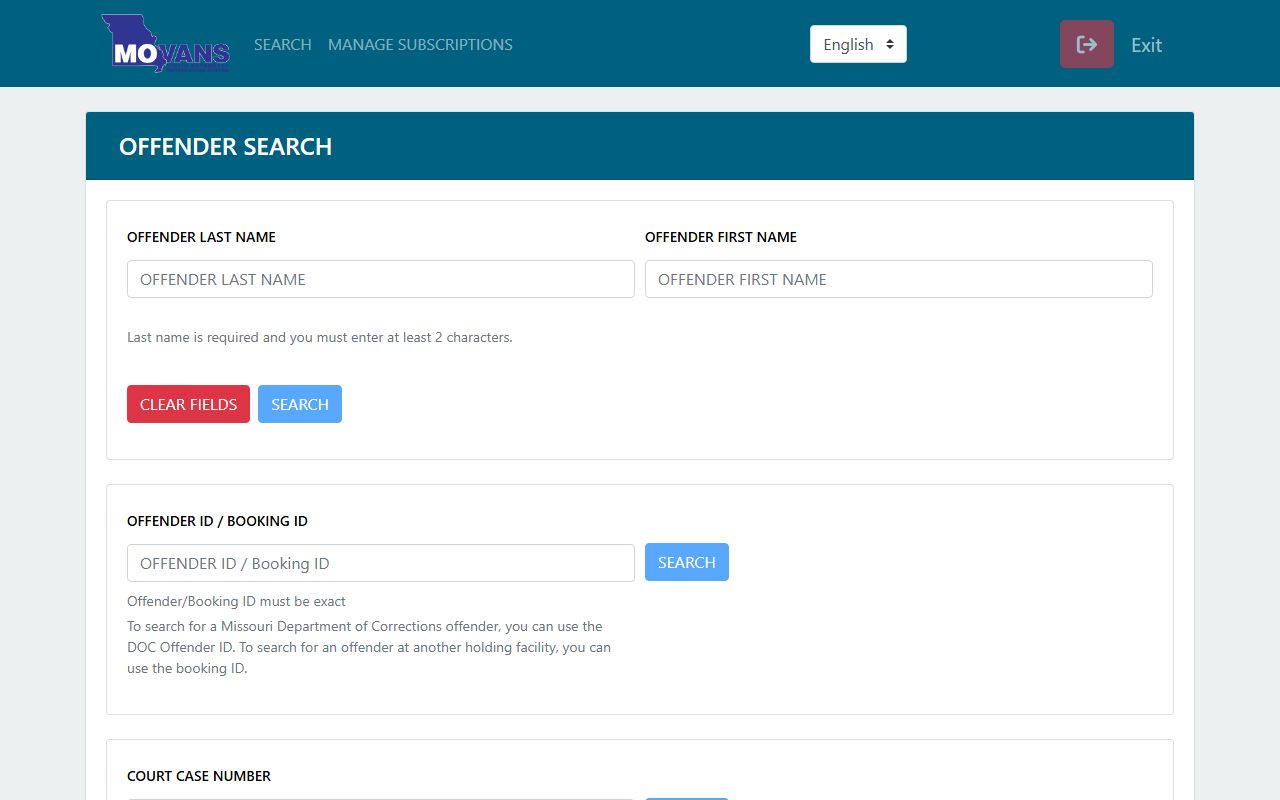
The successful MOVANS capture fits the arrest-to-notification path, while formal court filings still belong in Case.net or the circuit clerk's record.
Arrest to Missouri Court Records
The common flow is arrest, booking, first appearance, charging decision, court case, hearings, disposition, and sentence or release. Not every case follows that exact order. Some warrants begin before arrest. Some people bond out before the public roster updates. Some charges are declined. Some cases are filed under a different charge label than the jail booking field first showed.
For a current custody question, use the county jail roster. For a formal charge question, use Case.net. For a state-prison sentence after conviction, use MODOC. For federal or immigration custody, use BOP or ICE. The statewide directory helps identify the county or facility when a user starts with only a jail name or arrest location.
Federal custody after or alongside a Missouri court case is checked through the Bureau of Prisons inmate locator, not through Case.net or MODOC.
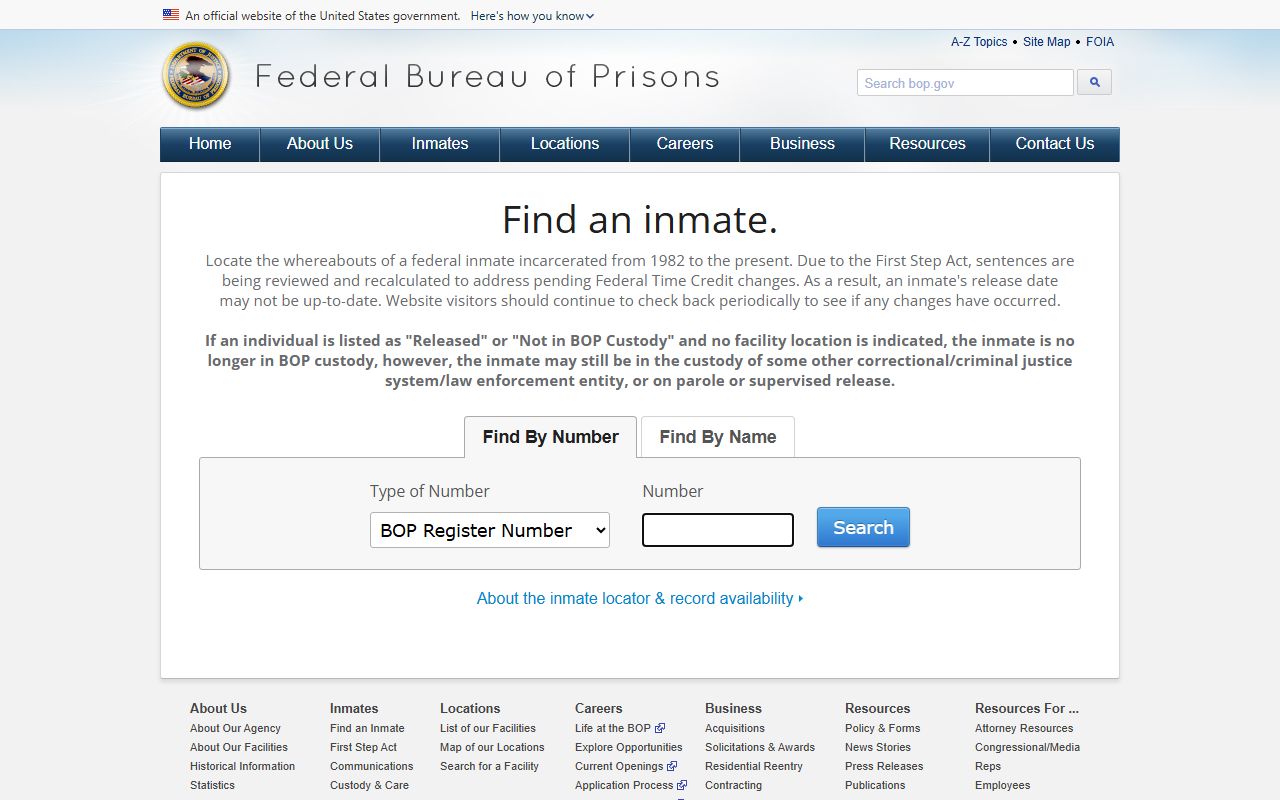
The federal locator is useful when a Missouri arrest or court event connects to a federal sentence or transfer, but court charges still need the court record.
Custody flow: Arrest -> booking -> first appearance -> charging document -> court docket -> disposition or sentence.
Find Missouri Court Records After Arrest
Case.net is the statewide public case-search channel named in the research. Search by case number if the roster, bond paperwork, warrant, or notice lists one. If no number is known, search by litigant or defendant name and narrow by county or circuit where available. Open the case record and read each charge, status, docket entry, hearing date, bond entry, and disposition carefully.
- Start with the county that booked the person or the county where the alleged offense occurred.
- Search Case.net by case number when one is known.
- Search by litigant name if the case number is not known.
- Compare the court charge list with the jail roster charge field.
- Use the circuit clerk when a public filing is not available online or when a certified copy is needed.
The Missouri State Public Defender court-date guidance also describes Case.net's Track This Case reminders.
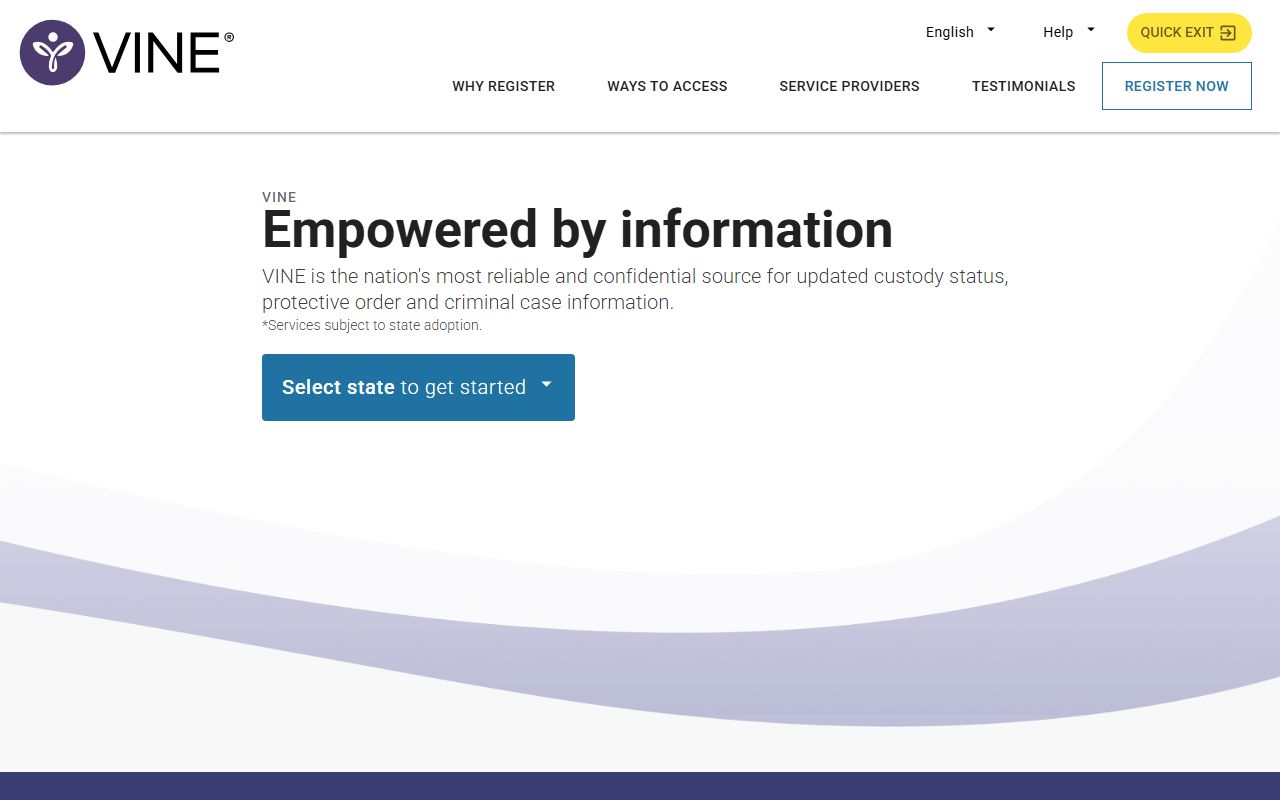
VINELink supports notifications where agency feeds participate, but it does not replace the court docket for charge status.
Missouri Charging Records After Arrest
The court record begins with a charging instrument. Missouri research for this apex page frames the main document types as complaint, information, and indictment. A complaint or information is usually prosecutor-driven. An indictment is returned by a grand jury. The label matters less to a searcher than the public result: once filed, the court case should identify the charge, level, status, docket events, and later disposition where public access is allowed.
| Document | Who starts it | What to check |
|---|---|---|
| Complaint | Officer or prosecutor process | Initial accusation and case opening details |
| Information | Prosecutor | Formal charge filed by the state |
| Indictment | Grand jury | Grand jury accusation in a criminal case |
Missouri Charge Status Records
Charge status changes as the case moves. A charge can remain pending, be amended, be reduced, be dismissed, or end in plea, trial, judgment, sentence, or other disposition. A court docket can also show bond changes, warrants, continuances, probation terms, or sentence entries. Do not treat an arrest as a conviction. A person is presumed innocent unless and until a court judgment says otherwise.
| Status | Plain meaning |
|---|---|
| Pending | The case or charge is still open. |
| Amended | The prosecutor or court record changed the charge wording or level. |
| Dismissed | The charge was ended without a conviction on that count. |
| Disposition | The case reached a court result, such as plea, judgment, sentence, or dismissal. |
The Missouri Attorney General Sunshine Law page explains why record requests should go to the agency that created or keeps the public record.
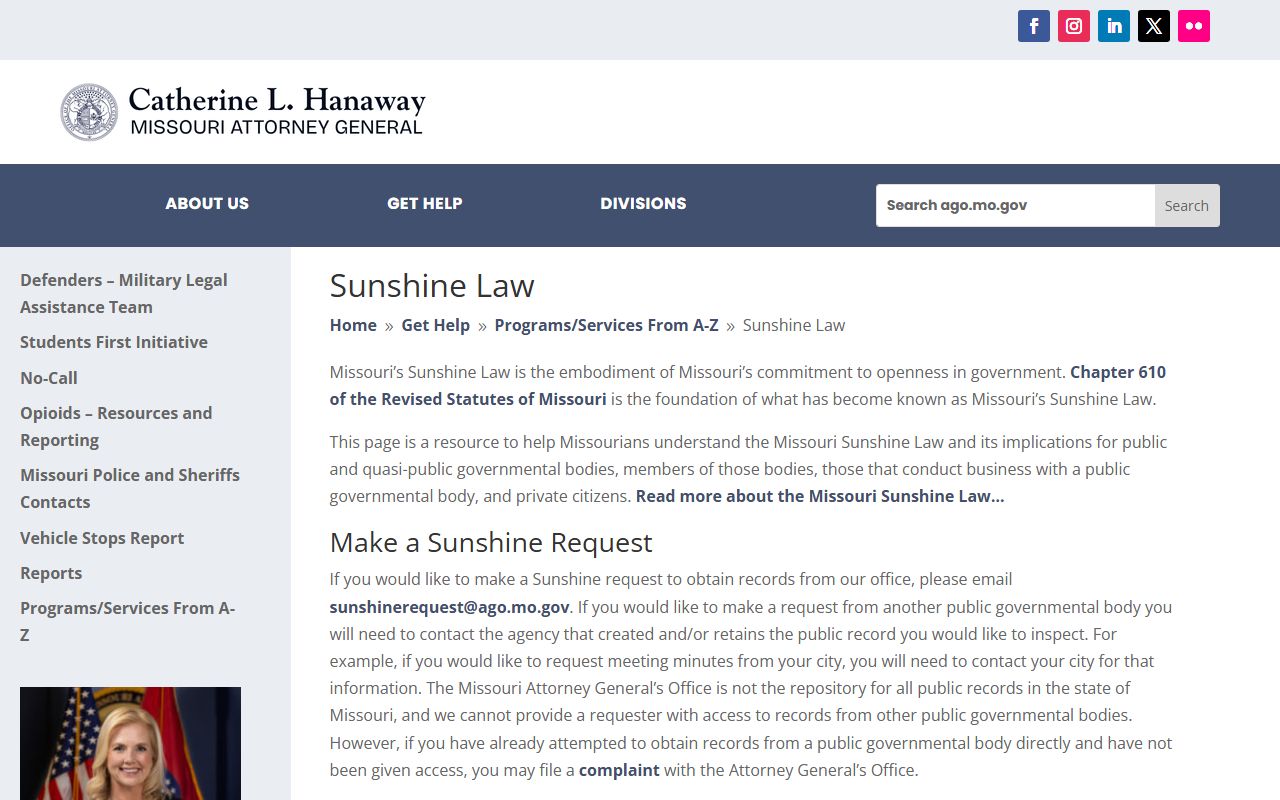
That rule separates jail records, court filings, prosecutor files, and MODOC records into different request channels.
Bond Records After Missouri Arrest
Bond information may appear on a jail roster, in a court docket, or in both. The roster may show a cash bond, surety bond, no-bond hold, or other release barrier. The court record may show the order that set or changed bond. A PR bond means personal recognizance, where release is based on a promise to appear and follow conditions rather than paying the full amount up front.
| Bond term | What it signals |
|---|---|
| Cash bond | Money must be posted under the court or jail rules. |
| Surety bond | A bondsman or surety may be involved. |
| PR bond | Release based on promise and conditions, if the court allows it. |
| No-bond hold | Release is blocked until a court or agency changes the hold. |
Charge vs Conviction Records
A charge is an accusation in a criminal case. A conviction is a court result after a guilty plea, trial verdict, or other judgment that legally establishes guilt. Court records after a jail arrest can show charges that never become convictions. Jail rosters can show booking charges that are later amended or dismissed. That is why custody lookup, court lookup, and criminal-history use should be kept separate.
| Charge | Conviction | |
|---|---|---|
| Stage | Accusation or filed count | Court judgment or plea result |
| Meaning | Not proof of guilt | Legal finding or admitted guilt |
| Where seen | Roster and court docket | Court disposition and sentence entries |
Restricted Missouri Arrest Records
Missouri public access has limits. Juvenile records, sealed records, expunged records, confidential victim data, investigative records, medical records, PREA or safety information, and security-sensitive material may be restricted. RSMo 610.100 also distinguishes open arrest and incident reports from investigative reports and certain closed or inactive records. If a public search does not show a record, the reason may be legal restriction, timing, dismissal, no charge filed, or a search mismatch.
The Sunshine Law framework also affects which office can answer a question. A court clerk can explain public court-file access, but cannot rewrite a sheriff's booking record. A sheriff may provide an arrest report or jail log, but cannot certify the final court disposition unless that record is in the jail file. MODOC can answer state-prison and supervision records, but it does not control local arrest reports or Case.net docket entries.
| Sealed | Expunged | |
|---|---|---|
| Public view | Hidden from ordinary public access | Treated under the expungement order's limits |
| Search impact | May not appear in public results | May be removed or restricted from public view |
| Next step | Read the court order or ask the clerk | Use the court order and legal counsel if needed |
Important: Court and jail records are not consumer reports and cannot be used for FCRA-covered screening decisions.
Missouri Court Dates After Arrest
Case.net and the State Public Defender's court-date guidance both matter after a jail arrest. The public defender guidance says users can search Case.net by case number or litigant name and use Track This Case reminders by text or email. Those reminders are useful for hearings, but they do not replace a court order, attorney notice, or clerk confirmation. If a person is in custody, the jail roster may show housing or release status while the court docket shows the next hearing and filed-charge status.